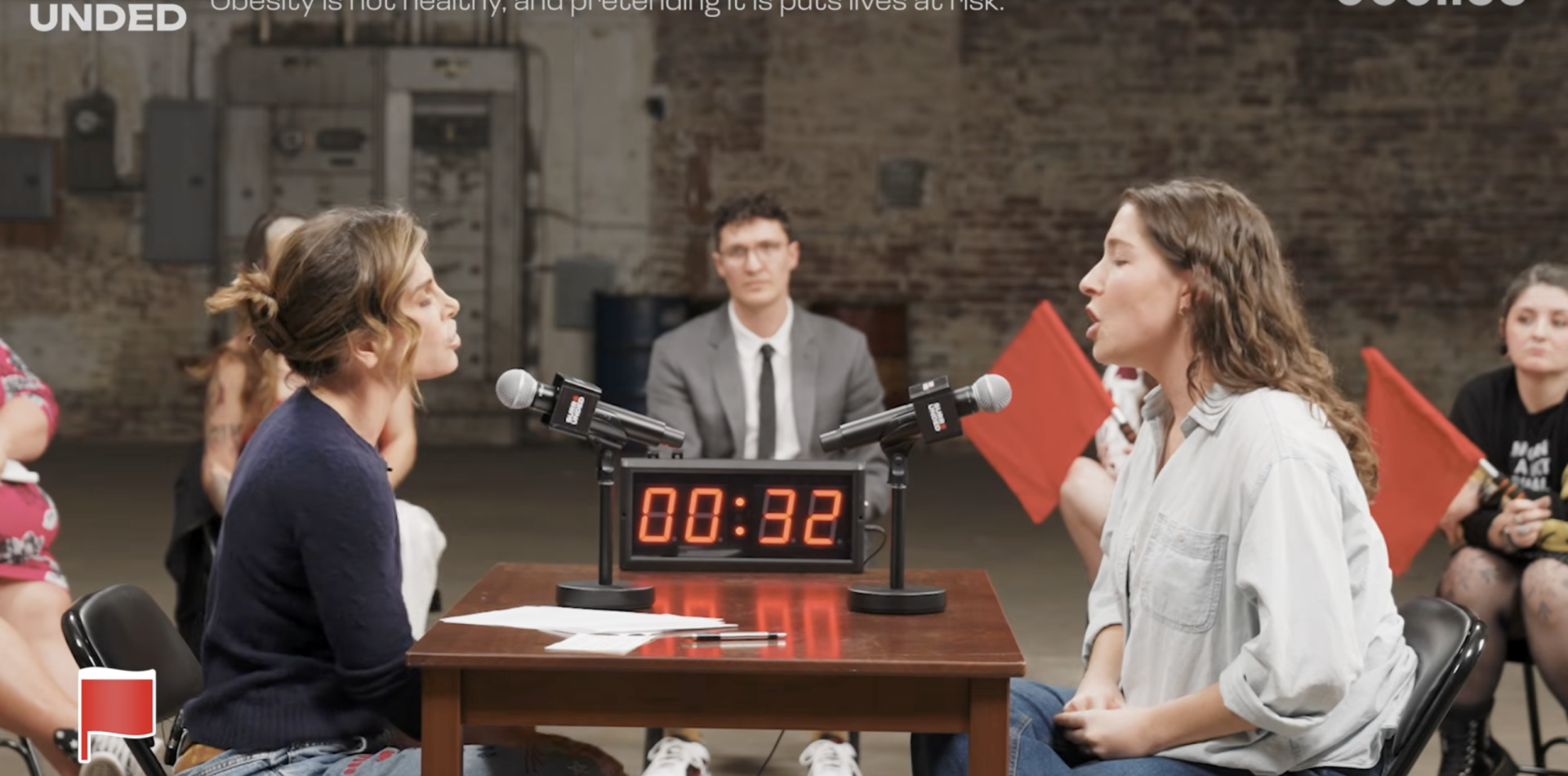
“Don’t do it,” my brother, Ben, warned me when I told him about the Youtube channel that reached out casting me for a debate.
He felt strongly that the channel, “Jubilee,” platforms problematic people, producing cheap, internet ragebait.
“Nothing good will come of it,” he texted me.
But I wanted to do it.
The channel has millions of subscribers; I kept telling myself that if just one person felt supported from what I had to contribute to the debate, it would be worth it.
So I did it.
It’s been 1 week since the Jillian Michaels vs. Body positivity activists debate aired and I came to the conclusion…Ben was right.
I don’t feel like I got a bad edit— I’m actually pleased with how my piece of the debate came out.Nothing “bad” really happened.
The worst of it was a bunch of comments on the Youtube video about how the dietitian in the debate (me  ) needs to “lose her license” because she’s “putting lives at risk” by promoting the idea that weight is not causal to health. But I still have some big feelings about the experience.
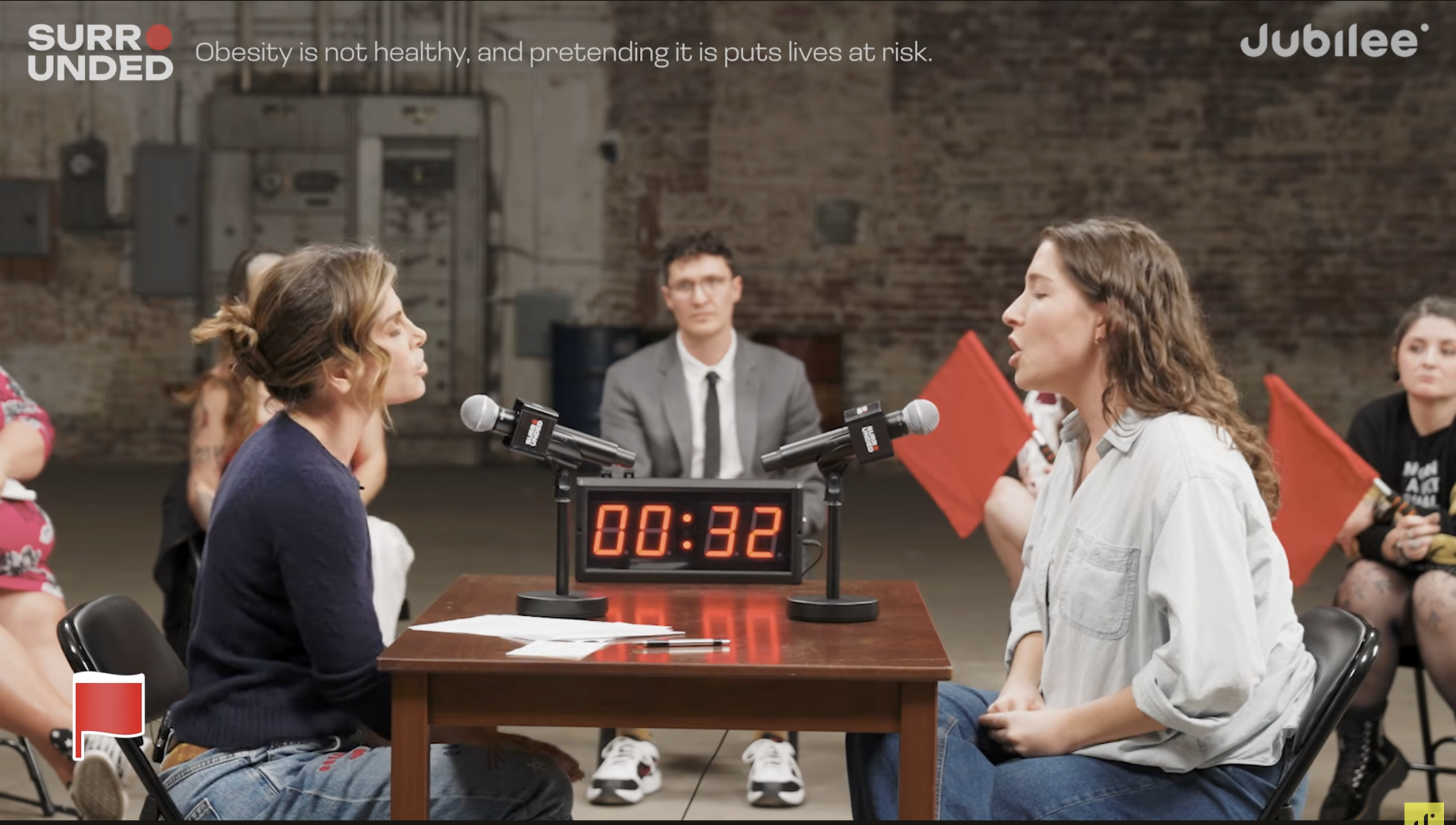
In this blog post, I’m sharing 9 reflections from the experience. More specifically I cover:
- Why viral debate formats are designed for conflict—not nuance or truth
- The emotional impact this debate had on me, my clients, and viewers
- What brings me back to center when diet culture doubt creeps in
- The limits of research—and the power of lived experience in healing
- Ethical concerns about how these conversations are produced and consumed online
- Why intentional weight loss isn’t a requirement for health
The video ultimately gives Jillian a (very big) platform to spread harmful ideas.
I agree with Ben, ultimately the video gave Jillian Michaels a platform to spew her shame-based, MAHA bullsh*t. It was hard for the other debaters to get a word in. So much of the video is giving Jillian airtime she doesn’t deserve.
Of course the people on the body positive “team” got airtime too, but Jillian got to sit in the debate chair the entire time. We each only got a few minutes. At the end of the day, she got the most time of anyone to speak which leads me to my second reflection…
The way Jubilee sets up their debates is inherently (and intentionally) not conducive to a productive conversation.
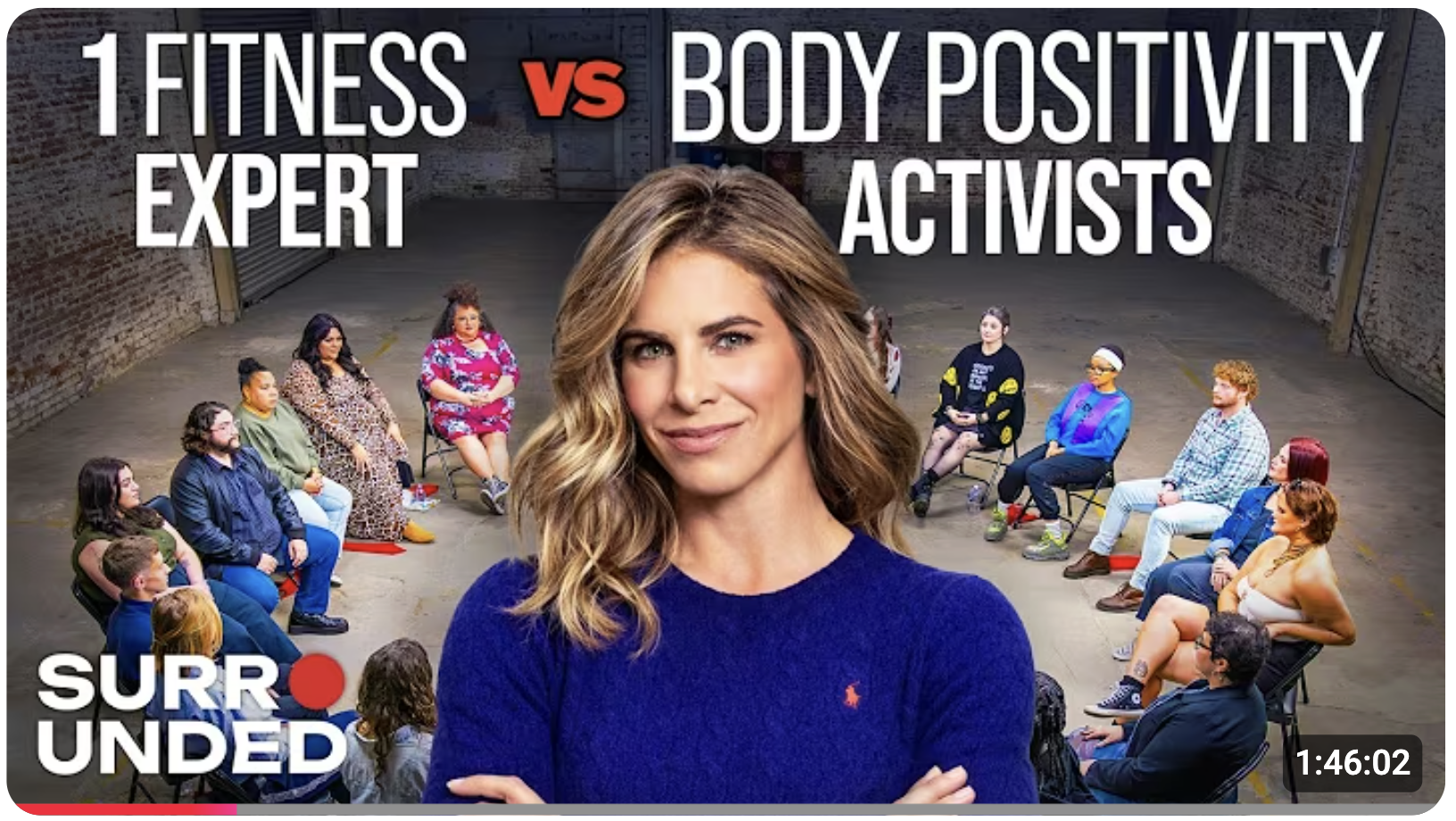
Each person only had a few minutes in the debating chair vs. Jillian. Just when we were starting to get somewhere, the buzzer would go off or the person would get voted out by the majority.
And when people were getting voted out by the majority, it isn’t necessarily because their team members didn’t think they were doing a good job, but because the only way to get in the circle to get a chance to debate is to have higher turn over of the person in the middle. So we were, in a way, incentivized to vote out our fellow teammates.
On top of the short debate window, the “body positive” team wasn’t necessarily united… most of us met for the first time on the day of the shoot. And we didn’t even all necessarily agree on the things we were debating.
We all came from unique backgrounds which is great in terms of brining different perspectives to the conversation, but also made it difficult to have a strong consistent thread through all of our arguments. Jillian didn’t have to worry about this. She was the only one representing her “team” therefore she didn’t have to consider how other people’s arguments would play into proving her points.
The Jubilee debates epitomize everything that is wrong with social media.
Jubilee produces fragmented information that makes for good pull quotes and 30 second clips, but lacks in depth and thoughtful synthesizing across sources.
This way of distributing information can come off bulletproof to the noncritical eye. Content neatly packed into branded carousel slides can be compelling.
Just as— in the case of the Jubilee debate— content with a high production budget published on a channel with millions of subscribers can be compelling.
But just because the content looks professional doesn’t mean its factual, ethical, or thoughtfully made. At the end of the day, Jubilee is a media company that is after clicks, views, and money.
I was naive to think this video could produce positive change.
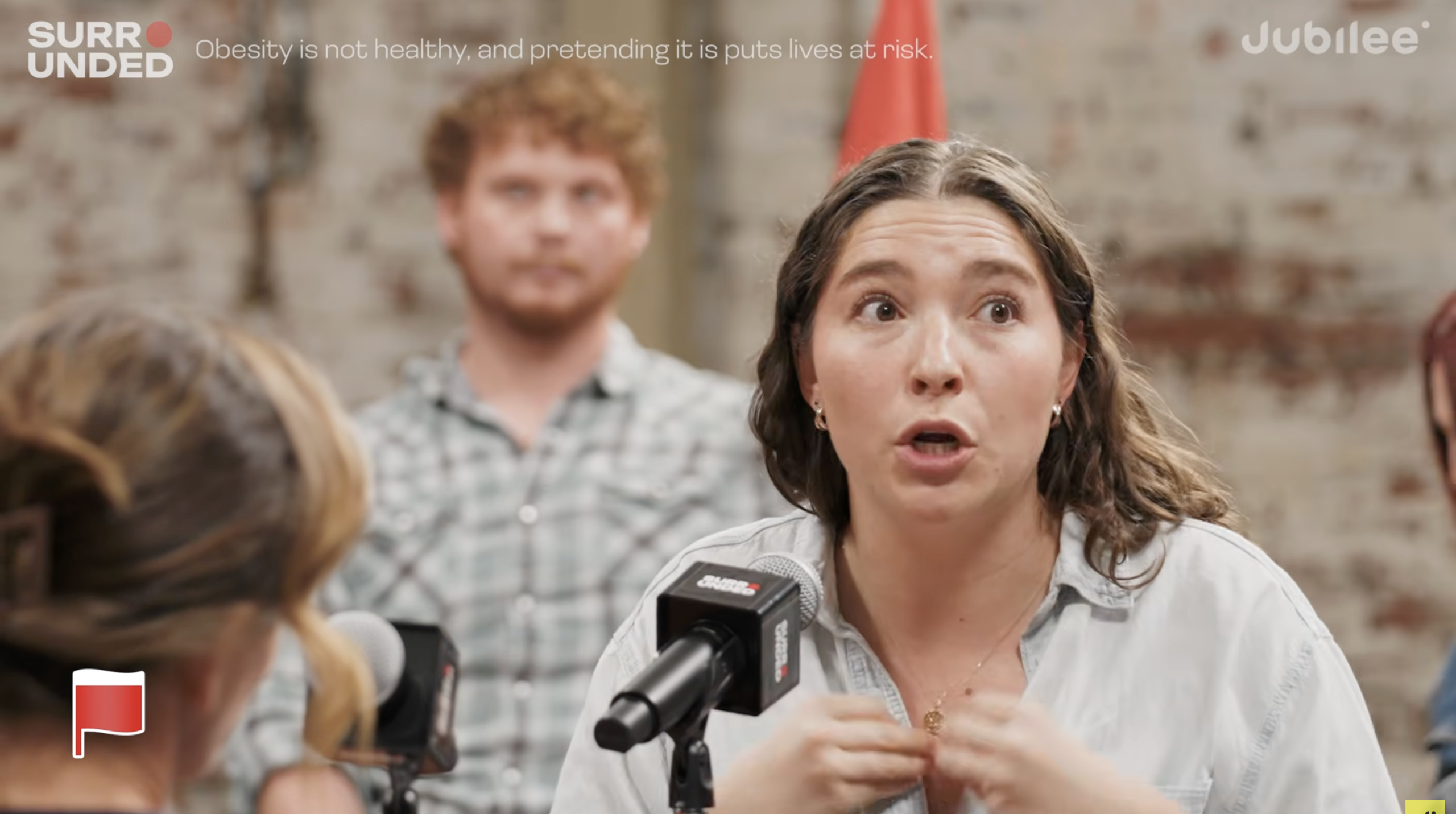
The reason I decided to take the risk and be a part of this debate was because I told myself, “if even one person see’s this and feels validated by their food and body struggles because of something I say, then its worthwhile.” I believed that by showing up as a non-diet, weight-inclusive, intuitive eating dietitian in this debate, I could help at least one person.
I, of course, can’t say for certain if my part in the video did end up helping any of the viewers (there are over 3M at this point, so the odds are likely) but still…
I don’t believe that the net impact of this debate was positive.
Because, in order to get to the amazing fat-positive activists and ED providers in the video, you have to wade through the violent water that is Jillian Michael’s hate-filled, stigmatizing, condescending bullshit.
And beyond having to encounter her toxic perspectives, there is of course the risk of stumbling into the even more toxic comment section. Overall, the video gives dark energy, and it’s not something I’d want people in recovery from diet culture to stumble into.
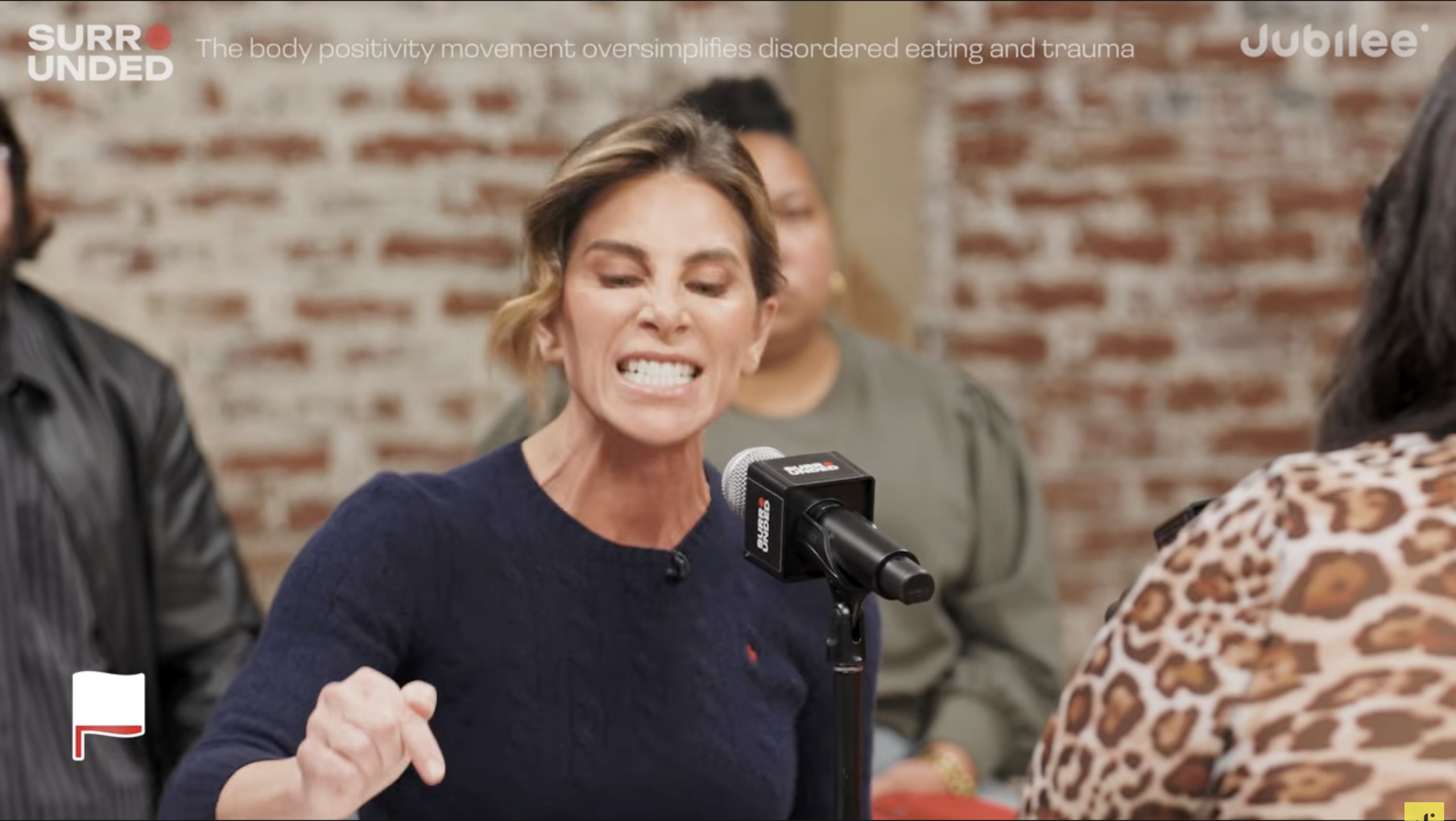
My clients were overwhelming activated by the debate
Many of my 1-on-1 clients were excited to watch the debate. I sent it out to my whole community with the warning that it might not be a good idea to watch if you aren’t feeling solid in relationship with food and body at the moment.
Of the clients who saw the video, it inevitably came up in session and overwhelmingly, the consensus was: wow, even though I’ve felt more solid in my relationship with food and body lately, this video still rocked me.
And I get it. Jillian Michaels is compelling. She talks with conviction and uses sciencey words that make her seem credible (more on this later). I can completely see how my clients could fall under her spell.
To be so honest, as I’ve been hit with a ton of hate in the last week because of my views rejecting the prescription of intentional weight loss, I’ve also felt rocked.
This tiny voice crept into my head saying, “maybe they’re right… maybe you are a bad dietitian for not teaching people to lose weight, and instead working with them to make peace with food and body.” That’s scary to admit, but it’s important because its real life.
Even I — a proud anti-diet dietitian, certified intuitive eating counselor, and human who has personally been on a body acceptance journey for 10+ years— can be rocked by Jillian.
I am not invincible.
Diet culture still fucks with my head from time to time.
So I can only imagine how my clients and other people in the non-diet community would feel watching this debate.
When diet thinking and weight-stigma are the normative ways of relating to bodies in our culture, it’s easy to feel the constant pull back towards that thinking.
When that voice creeps in, research and stories bring me back to center.
When I feel myself inch towards letting Jillian get in my head 2 things bring me back:
The first is the research. The large body of research on the longterm efficacy of pursuits at intentional weight loss consistently shows that, more often than not, people gain back all the weight they lost if not more.
This is not a matter of being personally flawed or lacking “discipline.” It’s the body doing a really good job at protecting us. There are now over 100 studies showing that intuitive eating, a non-diet weight neutral approach, leads to better health outcomes compared to the weight-stigmatizing approach championed by folks like Jillian Michaels.
If you want to dive into that research, you can check out this podcast episode or download this free HAES research PDF.
The second thing that re-grounds me when the siren call of Jillian Michaels feels sticky is story.
One of my favorite professors from undergrad, Dr. Lizzy Pope, said something on my podcast a few years ago that I’ll never forget. “Research is just one way of knowing, but lived-experience and stories are just as important.” And that was coming from someone with PhD who has done extensive research as part of her studies.
Of course, the Jillian Michaels groupies would say “these debaters brought all emotion and no facts! Jillian brought all the facts!” The people on Jillians “side” discount stories and lived experience, but its one of the truest things we’ll ever have.
You can read all the research about all the dieting and exercise techniques but you could also look at your lived experience to know whether or not these things work long term. If you’re reading this, I’m sure you’ve tried something to lose weight. And it likely worked for a little until it didn’t.
Almost all of the clients I work with have tried methods of dieting, restricting, and exercising, only to be left feeling more obsessed and out of control around food and dissatisfied with their bodies. We don’t need a study to “prove” that. We can look to our own stories or in the case of providers, the stories of our clients.
And I’m sure there are people who will say “but I did lose weight once and I felt better.” And I hear you. There is a reality to this. We live in a world that stigmatizes fat bodies so of course it feels better to lose weight, in turn gaining the approval and acceptance you so deserve.
But “feeling better” because of societal approval isn’t everything. Often I have clients share that yes, it was nice to have people treat them with more respect or to get more positive attention for their body, but it also sucked to feel hungry all the time. And preoccupied with food. And out of control around sweets. We have to look at the whole picture.
Jillians was next level condescending
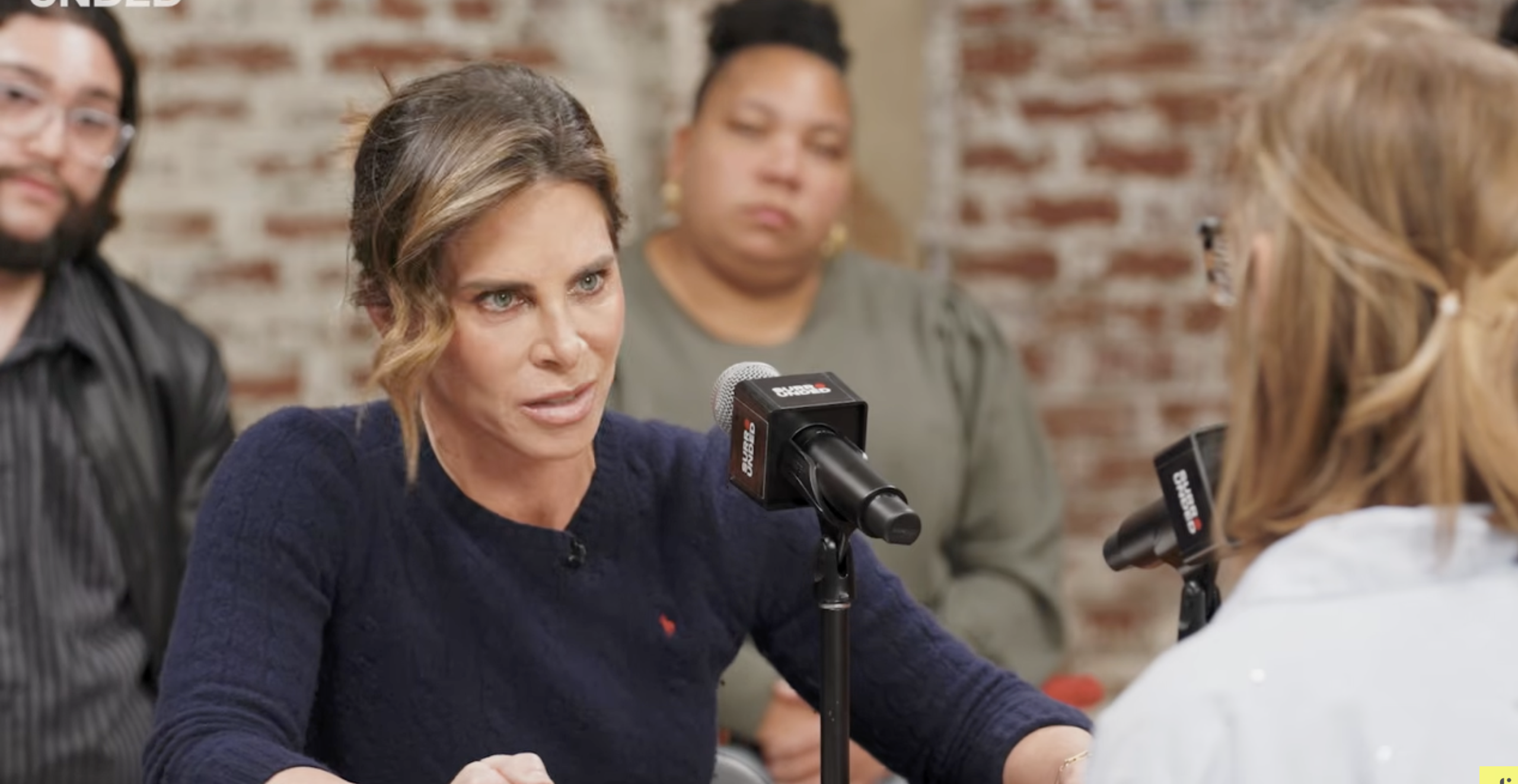
During the live shoot, I was initially taken aback by how soft and sweet Jillian came off. But this soft energy quickly showed itself as performative and condescending— not genuine.
When people came to the debate chair sharing their lived experience with eating disorders or weight discrimination, she put on this empathetic face. And I’m even willing to hold space for the possibility that, maybe she did feel some empathy for the humans sharing their stories.
But the condescension came in when she called participants in the debate chair “sweetie” “dude,” and “buddy.” And, when she spoke in a loud whisper, drawing out her words as if the person sitting across from her was dumb.
Her patronizing energy also manifested in the way she “quizzed” participants about scientific terms. This was a tactic she took specifically when interfacing with some of the providers in the debate (namely, myself and Edie Stark).
With me, she blurted out “what is lipotoxcity? what is fatty liver disease?” as if she was trying to out me as a non-credible dietitian. With Edie, she did the same thing except using the term “adiposeopathy.”
Jillian was trying to act as a therapist when she has no credentials to do so.
When people were sharing their stories, Jillian was trying to dig into their trauma. Not only is it unethical and dangerous for an untrained person to try and assume the position of a psychotherapist, but it’s also completely inappropriate in a setting where people aren’t asking to be therapized.
When participants shared pieces of their stories, it was to add emotion and lived experienced to the debate about body positivity, not to get unsolicited therapy from Jillian Michaels.
One woman shared how the movement helped her find peace when she was struggling with anorexia as a teen. Another woman shared how body positivity helped her find a way to cope with her chronic pain and neurodivergent brain.
And Jillian had the audacity to dig in with therapeutic questions like:
“What was the first time you felt that way?”
“Where does that shame come from?”
Not to mention her obsession with bringing everything back to the idea of a “primary wound.”
This does harm to the participants and it was not okay.
On the topic of harm…
If it wasn’t already abundantly clear, I am not impressed with Jubilee.
 Jubilee creates inflammatory content that leaves an emotional uproar of hate and negativity in its wake. Then, they just leave it there. Minimal concern for the ethics, safety, or well-being of viewers or participants.
And I know this wasn’t just the case in the video I was a part of, because the day before it aired, we got what seemed to be a standard “warning” email. The Jubilee team essentially cautioned us that things could get violent once the video gets published.
So, they encouraged us to privatize our social accounts and take down personal info from social media in order to combat the onslaught of trolls that could contact us due to “passionate” feelings about the debate.
The fact that this channel produces such uproar that there needs to be a standard procedure for dealing with hate and trolls says it all.
We still have so much work to do to move towards a world where all body sizes are treated with respect.
Between Jillians claims and the abundance of commenters in support of her claims, it’s clear that there is still so much work to do. Sometimes I get stuck in my little non-diet, eating disorder provider, weight-inclusive bubble and I forget that so much of the world (especially now in the age of GLP-1s) acts out weight stigma.
Meaning, so many people believe that a person must lose weight to be healthy, or that larger bodied people are inherently “lazy” and “undisciplined.” This isn’t true.
I know it from my extensive education as an intuitive eating dietitian and from supporting over 100 clients on their recovery journeys. People living in larger bodies have often not only tried to lose weight, but they’ve tried very hard. Because thats what they have been told to do by everyone from doctors to parents to strangers in the media like Jillian Michaels.
And Jillian would say, “well if they worked with me I could get them to lose weight and keep it off.” And who knows, maybe that’s true. But the odds are not high, given the extensive body of research showing that most dieters regain all the weight they lost (if not more) within 5 years.
Jillian Michaels might be a celebrity trainer, but she’s not a magician who can defy the odds of science.
Final Thoughts
This experience gave me something like 15-mins of fame. A few people from my past reached out to say they saw a clip of me on TikTok or Youtube. Collegues emailed me to commend my bravery.
Though I appreciated the words of support from peers, ultimately, I don’t think the exposure was productive in terms of furthering the messages I want to spread (Intuitive Eating, body liberation, HAES).
If you are a supporter of Jillian Michaels and you her content “motivates” you to pursue weight loss— you have body autonomy and you are allowed to choose that path. I don’t judge people who want to lose weight— I get it. You’re not wrong for desiring weight loss. It makes so much sense given the roaring diet culture we’re swimming in.
But as an eating disorder dietitian, I see the slippery slope from pursuing intentional weight loss to disordered eating. And therefore, it’s not within my integrity to promote this way of pursuing health.
Instead, if health is a value that my clients hold, I work with them on evidence-based methods to achieve health such as:
- Working on adequate and consistent nourishment.
- Adding in sources of gentle nutrition (not restricting foods, because that just leads to binge eating).
- Engaging in forms of joyful movement, not coercive, punishing exercise to “repent” for what they eat.
- Incorporating satisfaction and pleasure in eating because joy is good for our health.
- Getting rid of the guilt and shame that comes with dieting; guilt and shame leads to social isolation and social connection is a well-cited determinant of health.
- Reducing stress (like the stress that comes with disordered eating) because stress negatively impacts health.
I don’t care how many different ways Jillian tries to spin it— here’s the truth:
You do not have to be a certain size to be healthy. This doesn’t mean every person in every body size is “healthy.” It means that if health is a value you hold, you can work towards health promoting behaviors at any size without weight loss being a necessary outcome.
Last modified: March 25, 2026