

8 Diet Culture Examples from Starbucks
1. The Mom to Son Portion Comment
What was said: *mom says to young son* Are you really going to eat that? It seems like a lot of food.
Why it’s diet culture: At face value, this statement may not exactly sound like diet culture. There’s a world in which this was just a mom trying to prevent her son from wasting or getting a stomach ache. With these comments, tone is everything… And the tone I witnessed when overhearing this exchange was judgy. With that in mind, this comment reads as diet culture.
At first glance, this might sound like a harmless or even caring comment—but it reinforces the idea that someone else gets to judge how much food is “too much.”
How it’s harmful: This is a core part of diet culture: teaching us to distrust our own hunger and rely on external rules or opinions instead.
The vibe I got was that the mom was projecting her own fears about eating “too much” onto her son at that moment. One aspect of diet culture (per Christy Harrison’s definition) is “elevating certain ways of eating while demonizing others.” In this instance the mom seemed to be suggesting it would be more correct or morally sound to eat less instead of more– elevating her idea of the right way to eat and subtly demonizing her son’s body cues.
2. The Drink Calories Comment
What was said: This drink is worth the same amount of calories as my next six meals.
Why it’s diet culture: This may just sound like someone making an offhand comment about calories. Maybe they were even joking. Or maybe they were just caught off guard by the number.
But when we take a step back, this is standard diet culture thinking: Diminishing food down to a math equation. It feels very transactional, in the sense that consuming the drink would be “paid for” by skipping future meals. It takes the enjoyment out of eating and turns it into a bargaining experience where you must “earn” or “pay back” calories.
How it’s harmful: When eating becomes a math equation, we default to mental gymnastics, rather than listening to our bodies hunger and fullness cues.
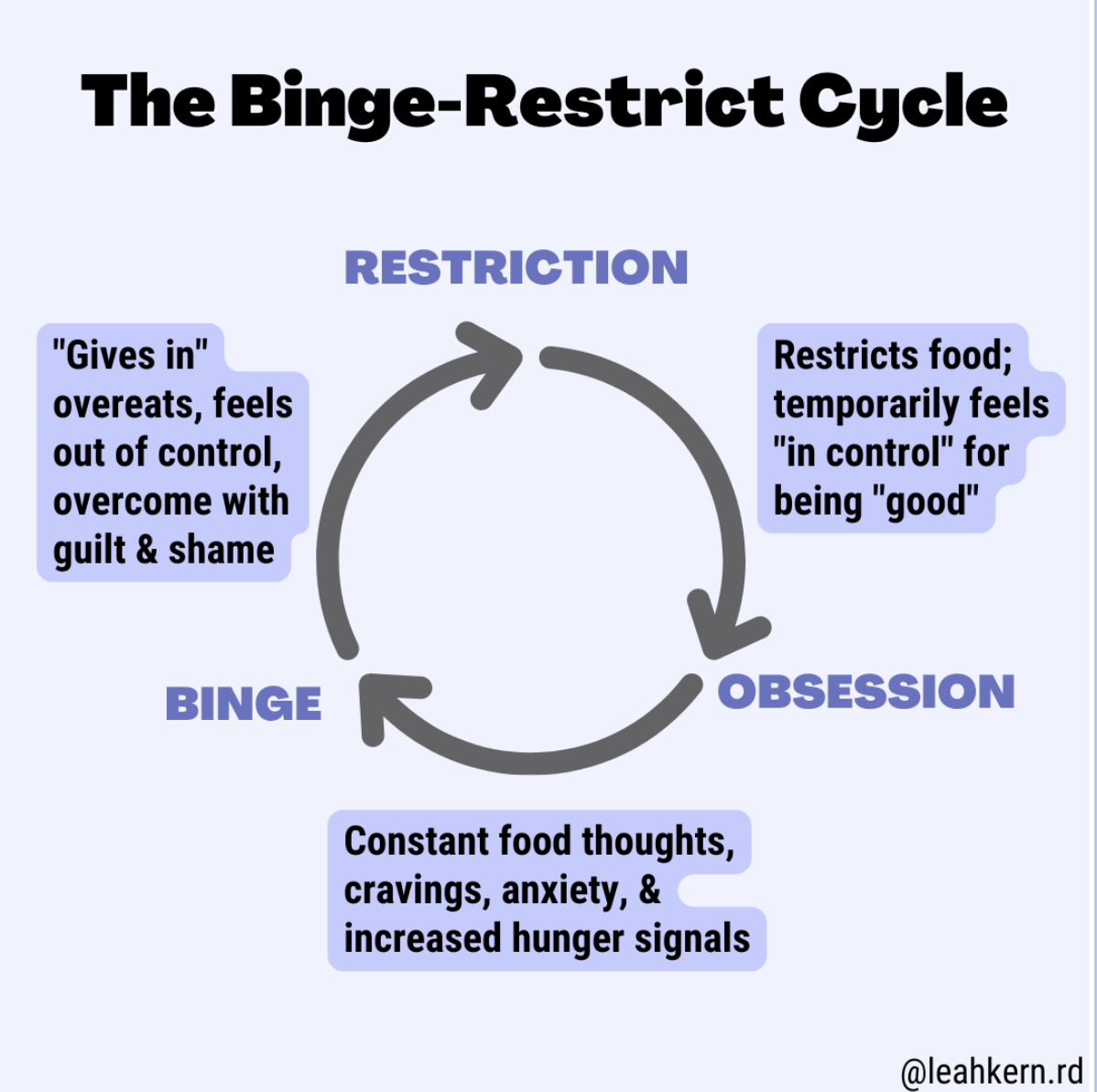
This mindset can lead to restriction: a drink is no longer just a drink; It becomes a “setback” or “mistake.” This is the type of thinking that can lead to feeling like you have to punish yourself, fueling the all-or-nothing, binge-restrict cycle.
3.The Sugar “Limit” Remark
What was said: Is the tea sweetened? I’ve already hit my sugar limit for the day.
Why it’s diet culture: On the surface, this may just sound like someone being mindful about their sugar intake, which is not necessarily a bad thing. Comments like these could be related to medical conditions or other circumstances, which is why context is so important.
However, the idea of a sugar limit means that this person has a set rule for the amount of sugar they’re allowed to have. Following outside rules and metrics is characteristic of diet culture, whereas going inwards to your body’s cues is the intuitive eating approach.
The issue with having a “sugar limit” is the restriction component. We know that restriction leads to food obsession and often binging.
Diet culture loves to implement these “rules”, that if you break you should feel bad or ashamed about. In this case, this individual has already “maxed out” on their sugar intake for the day and consuming anything else would be considered breaking the rule, leading to guilt, shame, and potentially binge eating.
How it’s harmful: This idea of a set limit creates fear around eating.Telling yourself you can only have this set amount makes eating decisions more stressful and ultimately, puts sugar on a pedestal
This way of thinking is exactly what can lead to binge-restrict cycles:
4. The Being “Bad” Comment
What was said: *asking themselves* Should I get a pastry and be bad today?
Why it’s diet culture: Statements like these are tricky because they can come across as joking. However, referring to yourself as being “bad” simply for eating a pastry turns eating into a moral issue.
Diet culture thrives on putting foods into boxes of “good” and “bad.” If you’re eating foods that fall into that first box, you’re made to feel morally superior. But, if you eat foods that fall into that second box, you’re made to feel shame and guilt. Your food decisions turn into a reflection of you as a person (which, of course, they are not!!!)
How it’s harmful: Labeling food as good or bad makes eating into a very charged experience. With diet culture, you’re no longer just eating, you’re now making moral decisions that reflect your character.
If you have a good day and restrict, then you feel great. But if you have a bad day, you might as well continue and it leads to this rabbit hole. Both are extremes that are unsustainable.
Although you may feel good mentally because you restricted, your body is in pain because it is hungry, and you’ll likely be plagued with thoughts about food. On the flip side, if you eat something “bad,” you feel distress because you think you are a bad person. There is no winning.
5. The Mom Policing Her Daughter’s Food
What was said: *mother says to young daughter* You don’t need all those calories today.
Why it’s diet culture: A parent saying the child doesn’t “need” calories takes the focus away from the food and puts it on the numbers. This is teaching the child that rather than listening to their cues, they should ignore their internal wisdom and instead default to arbitrary rules.
How it’s harmful: When a child hears that they “don’t need” calories, it can cause them to question what, when, and how much they should eat. This can lead to the erosion of body trust; a vital skill that must be protected, especially in youth who can be more impressionable to messaging.
6. The Toxic “Summer Body” Comment
What was said: I’m ordering this so I can get my summer body.
Why it’s diet culture: “Summer body” is a term coined by the media-driven standards to appear tone or fit in swimwear. It implies that your body in its natural state isn’t “swimsuit ready” and needs to be “fixed” before summer. This term encourages extreme restricting and exercising in order to change your body before summer hits. In this case, diet culture is creating a problem and selling you its solution.
How it’s harmful: The idea of a “summer body” reinforces the message that your body isn’t good enough unless it meets a narrow and unrealistic standard. It suggests that attractiveness (and even worth) is tied to eating and exercising in a very specific way. But bodies are naturally diverse, and no one can look exactly like someone else.
When people realize they can’t achieve these idealized standards, they often turn the blame inward. They push harder: restricting more, exercising more, trying to force their bodies to change. Over time, this can leave you exhausted and may lead to patterns like the binge–restrict cycle (see above graphic)
7. The Demonizing Sugar Snark
What was said: I don’t drink all that sugar and other garbage you guys put in your drinks.
Why it’s diet culture: Labeling a food as “garbage” turns a drink that is consumed for enjoyment or a caffeine boost into something that makes you gross, lazy, or inferior. Also, another customer nearby who may love the drink is now getting indirectly shamed and judged for having that drink just because it has sugar in it.
In this case the customer was subtly saying that they were better because they didn’t want that drink while indirectly putting other ways of eating down.
How it’s harmful: Associating anything with sugar as bad, creates a fear-based relationship with food. Again, this fuels all-or-nothing cycles, imbeds morality into eating, and reinforces valuing outside rules over intrinsic body cues.
8. The Gym Bro Justifier
What was said: I just came from the gym, so I earned this today.
Why it’s diet culture: It’s great to go to the gym if you enjoy it; there are so many mental and physical benefits, yet if the only purpose is to burn calories so that you can eat throughout the day… that’s where it gets unhealthy.
This brings it back to the numbers game and leaves you feeling like you must burn the calories before you deserve to eat.
How it’s harmful: Believing that you have to lose calories in order to earn them back, is directly associated with the binge-restrict cycle. It makes you feel like you haven’t earned the right to eat, which is a natural human need to survive. It also detaches us from our body, and put the focus on the numbers.

Last modified: April 27, 2026